Open: Sun 2:00 PM - 5:00 PM





Clayton, North Carolina, is one of the most affordable towns on the southeast side of the Raleigh Triangle, and it keeps pulling buyers who got priced out of Cary, Apex, and Holly Springs. Most relocation guides skip the most important part: where you land inside Clayton shapes your commute, your daily convenience, and your experience of the town far more than most buyers realize. Get that decision right, and Clayton delivers real value. Get it wrong, and you will spend a lot of time in the car, frustrated.
We created a video covering all of these topics, if you would rather watch than read.
At Raleigh Realty, we have helped families relocate to Clayton from across the country. This guide covers what the town actually looks like today, home prices, neighborhoods, jobs, schools, parks, and the honest trade-offs you should know before you go.
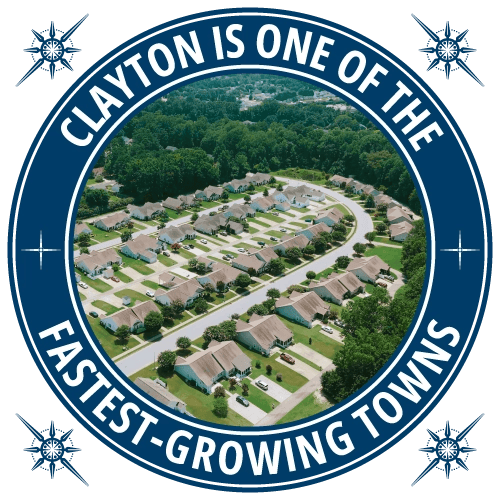 Clayton had about 16,000 residents in 2010. By 2024, that number had grown to roughly 32,000, nearly doubling in fourteen years. It is the fastest-growing town in Johnston County and one of the fastest-growing mid-sized towns in North Carolina.
The growth is not accidental. As home prices on the western side of the Triangle pushed past $500,000 in Cary and Apex, buyers started looking south and east. Clayton offered more square footage, larger lots, and a lower price point, without asking people to leave the Triangle entirely. The 30-to-40-minute drive into Raleigh, which might have felt long to a native Carolinian, is a warm-up lap for anyone relocating from California, New York, or the D.C. corridor.
The town is also investing in its own future. The Clayton 2045 Comprehensive Growth Plan and the Downtown Master Plan (adopted in September 2024) lay out a clear framework for smart commercial development, expanded infrastructure, and more walkable community spaces. Clayton is not just a bedroom community waiting for Raleigh to spread further. It is building toward becoming a destination in its own right.
As of early 2026, the median home price in Clayton is around $383,000. Raleigh runs closer to $425,000, and Durham is closer to $500,000. That gap is the core reason buyers keep coming. You get more house, often on a larger lot, at a price that still makes sense for first-time buyers and growing families.
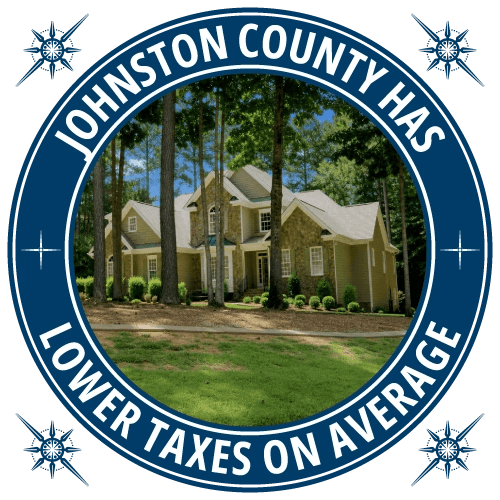 Johnston County's property tax rate is also lower than Wake County's, roughly 15% lower on comparable properties, according to figures from the Johnston County tax estimator. That difference adds up on a mortgage payment. For buyers coming from Wake County towns, it is one of the first things worth running the numbers on. You can also find more about North Carolina property taxes across counties on the Raleigh Realty blog.
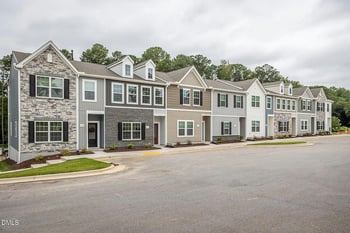
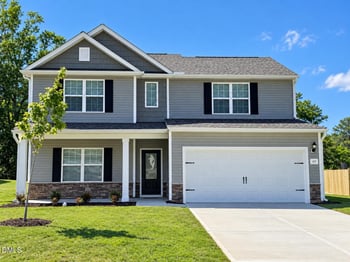
The neighborhood options in Clayton span a wide range.
One practical note on flood risk: some properties near the Neuse River fall within FEMA-designated flood zones. Before closing on any home near the river or in low-lying areas, check the FEMA Flood Map Service Center for the specific address. Most residential developments in Clayton are built outside flood-prone areas, but it is worth verifying rather than assuming. You can read more about what to look for when buying new construction on the Raleigh Realty blog.
I usually tell buyers who are comparing neighborhoods in Clayton to think about the commute first, not the floor plan. The neighborhood you pick determines your route, and your route determines how the town feels to live in day after day.


Clayton is not one uniform town. It is made up of distinct pockets, and where you are relative to the main corridors shapes the commute in ways that are easy to underestimate. This is the single most important thing most relocation guides miss.
The primary routes out of Clayton are US-70 (now officially renamed Clayton Boulevard), Veterans Parkway (formerly NC-42 West, renamed in February 2025), and the interstate corridors: I-40, I-95, and I-540. Which of these is closest to your neighborhood determines how your morning goes.
If you commute toward downtown Raleigh or the east side of the city, you want fast access to I-40 or Clayton Boulevard. If you are heading toward Cary, West Raleigh, or Research Triangle Park, route strategy matters even more. Some buyers use I-540, a toll road, to cut time and avoid congestion. Others budget around avoiding tolls entirely. There is no wrong answer, but it needs to be a decision you make before you fall in love with a house.
The practical advice: do not just look at a map. Test-drive your actual commute during the hours you will be traveling. The drive from Clayton to downtown Raleigh at 9:30 a.m. is a materially different experience than the same drive at 7:30 a.m.
The good news is that the I-40 widening between Raleigh and the Clayton area was completed in 2024, which made a noticeable difference for commuters. The full I-540 outer loop is scheduled for completion in 2028, and the long-term plan to upgrade US-70 to interstate standards, with sections authorized for redesignation as Interstate 42, would make Clayton one of the best-connected towns on the east side of the Triangle. You can dig into commute patterns for the broader area on the Raleigh commute times page.
Clayton's overall cost of living runs below the national average. BestPlaces gives Johnston County a cost-of-living index of 92.7, indicating the total cost of living is about 7.3% below the US average. Housing is the biggest driver of that gap, but groceries, healthcare, and transportation also come in below average.
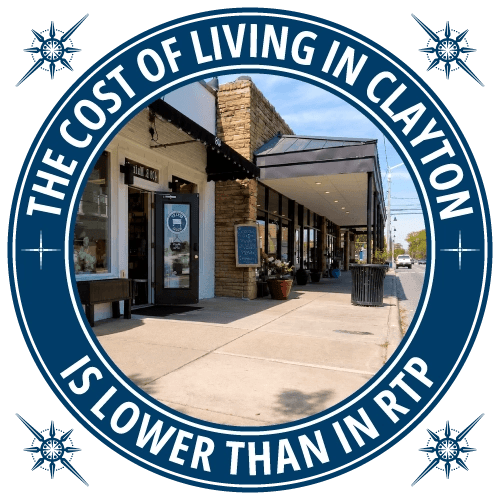 For context, a household earning $75,000 in Clayton would generally need around $92,000 to maintain the same lifestyle in Raleigh. That same lifestyle in Charlotte would require closer to $125,000. These are rough comparisons, but they give you a sense of the real-world difference.
Johnston County property taxes are lower than Wake County rates on comparable properties. The county also completed a revaluation in early 2025 to reflect current market values, so any figures you see from a few years ago may be outdated. Use the Johnston County tax estimator to get a current number for any specific address. Read our full guide to closing costs in NC for the broader picture of what to budget at the closing table.
For airport access, Raleigh-Durham International Airport (RDU) is a 35 to 45-minute drive from most Clayton locations. The Johnston Regional Airport (JNX) in Smithfield is about 15 minutes southeast and serves smaller regional flights. If you are a regular shopper, the Carolina Premium Outlets in Smithfield are about 15 minutes away. Major retailers like Target and Costco require a trip to Garner or Selma today, though that is expected to change as commercial development in Clayton continues to fill in.
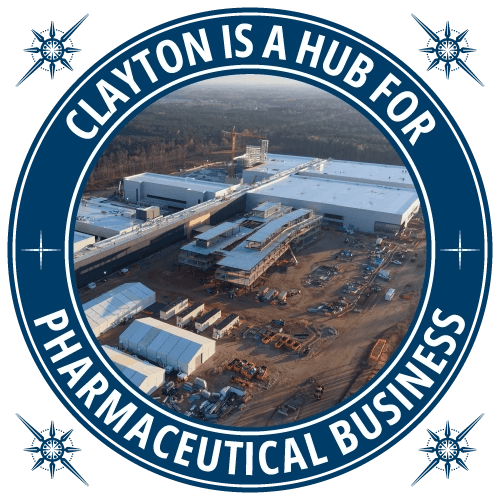 Clayton has its own employment base, and it is growing fast. The town has become a hub for biotechnology, particularly pharmaceutical manufacturing, a cluster that has reshaped the local economy over the past decade.
Grifols, a global biotherapeutics company, is the largest private employer in Johnston County, with a major plasma-based manufacturing campus in Clayton. Novo Nordisk, the pharmaceutical company behind Ozempic and Wegovy, announced a $4.1 billion expansion of its Clayton operations, which is described as the largest life-sciences investment in North Carolina history. That expansion is expected to add 1,000 jobs. Caterpillar and Johnston Health (part of UNC Health) round out the major local employers.
The pharma cluster goes beyond the big names. Johnston County Public Schools partnered with Novo Nordisk and Grifols to offer a BioWork certification program in every county high school. It is a one-semester course that provides students with a manufacturing associate certificate and a direct hiring path to entry-level positions at these companies right out of high school. That tells you something about how embedded these employers are in the community.
For commuters, Research Triangle Park is about 35-to-40 minutes from most Clayton locations. That puts Apple's regional campus, SAS Institute, IBM, and dozens of other major employers within reach. Downtown Raleigh adds WakeMed, Red Hat, and a growing financial and tech sector. When we help buyers weigh Clayton against closer-in suburbs, the commute math usually still works, especially for households where one partner works locally and the other commutes west.
Johnston County Public Schools operates the public schools serving Clayton. Students are assigned by address-based boundary maps, and those boundaries shift as the county builds new schools to keep up with population growth. Before you go under contract on a home, confirm the school assignment directly with the district using their student assignment maps. Do not rely on a listing description or a neighborhood name to tell you which school a specific address feeds into.
The district has been actively building to catch up with growth. Swift Creek Elementary broke ground in April 2024. Will Mills High School is also under construction. These additions reflect the district's response to population demand, which is a good sign for long-term capacity, though it also means that school assignments in newer neighborhoods may be in transition.
Private options include Southside Christian School, Ba's Academy in Flowers Plantation, and Johnston Charter Academy, a tuition-free public charter school. For higher education, Johnston Community College is local. Drive times from Clayton to major universities are roughly 25 minutes to NC State, 20 minutes to Wake Technical Community College, 45 minutes to Duke, and about 50 minutes to UNC-Chapel Hill. For buyers who care about how schools affect long-term home values, the relationship between schools and home values is worth reading.
Downtown Clayton is one of the best surprises in the Triangle for buyers who have not spent time there. It has a genuine historic Main Street feel: brick buildings, walkable blocks, free parking. And it has gotten meaningfully better over the past few years.
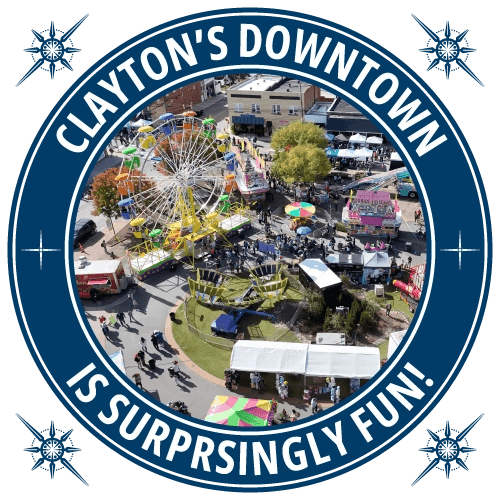 The longtime anchors are still there. Manning's Restaurant on Main Street has been a local institution for shrimp and grits and Southern classics. Clayton Steakhouse handles the red-meat crowd well. Deep River Brewing Company, in a renovated red-brick building at 700 W. Main Street, is a genuine craft brewery destination that draws from across the Triangle. Double Barley Brewing on US-70 W adds live music and rotating food trucks. Revival 1869 is the cocktail bar option.
The newer energy is harder to ignore. Boulevard West and Clayton Bakery and Cafe are the morning coffee stops. Crawford Cookshop, from Scott Crawford, one of the more well-known chefs in the Raleigh area, brought a higher level of dining to downtown. And The Station, a historic building that has been converted into a vendor-and-maker hub for local small businesses, has started to make downtown feel like a destination rather than just a drive-through.
The annual Harvest Festival draws over 15,000 visitors in the fall and anchors the town's community calendar. The Clayton Town Square Concert Series runs free concerts from May through September. The Clayton Center is the town's performing arts venue, hosting concerts and theater productions year-round.
I usually tell out-of-town buyers to spend a Saturday morning in downtown Clayton before they make a decision. It changes the picture entirely. Most people arrive expecting a small strip of shops and leave surprised by how much character the area actually has.
Outdoor access is one of Clayton's strongest cards. The trail network alone is worth knowing in detail before you move.
The Clayton River Walk on the Neuse is a paved 4-mile greenway along the river that connects to the broader Neuse River Greenway system and ultimately ties into the NC Mountains-to-Sea Trail, a statewide network spanning roughly 1,150 miles from the mountains to the coast. Sam's Branch Greenway adds a 1.25-mile paved connector from Clayton Municipal Park to the River Walk. The Neuse River Greenway trail segment running through Clayton, Raleigh, and Smithfield covers more than 65 miles of connected greenway and roadways.
East Clayton Community Park includes the East Clayton Disc Golf Course and the Harmony Playground, an inclusive playground built with wheelchair-accessible surfaces and ramps. Clayton Municipal Park has a splash pad open in late spring and summer, new playground equipment, and an outdoor covered stage. The Clayton Dog Park is across the street from East Clayton Community Park. The Clayton Community Center is a modern 32,000-square-foot facility. Amenities include an indoor walking track, fitness classes, an art and pottery classroom, and pickleball courts.
Legend Park has been undergoing remediation work. Check the Town of Clayton parks page for the current status before planning a trip around it.
For weekend getaways, Clayton's position on the southeast side of the Triangle makes beach access easier than from most Triangle suburbs. The North Carolina coast, including Wrightsville Beach, Wilmington's riverfront, and the Beaufort area, is roughly two hours away. The Blue Ridge Mountains are about 3.5 hours. People who relocated here from coastal states consistently mention this as a practical upside they did not fully anticipate.
Clayton is not a finished town, and for many buyers, that is exactly the point. The growth pipeline here is real, and most of it is moving forward on funded timelines.
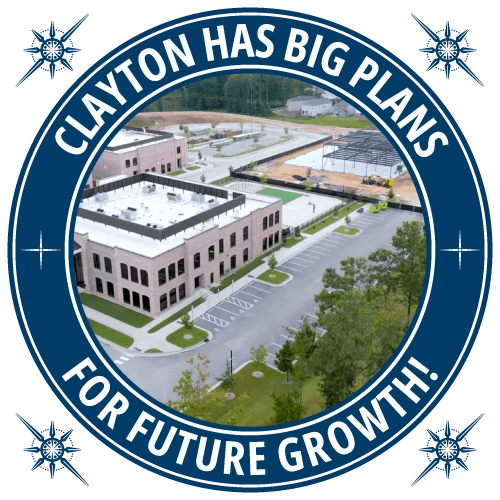 The biggest development to watch is The Copper District, a 300-acre mixed-use project on the former Penny Farm along Veterans Parkway and the US-70 bypass corridor. Developed by Craig Davis Properties, it broke ground in early 2024 and is already progressing. The developer completed a $1.7 million infrastructure investment in a new elevated water storage tank in March 2026 to support the district's buildout. The planned scope covers walkable retail and dining, Class A office space, residential lofts, a hotel, a central event plaza, and a greenway network. It is being positioned at the crossroads of I-40, I-540, and the future I-42 interchange, a genuinely strategic location. The full buildout will take years, but foundation work is underway now.
The Waterfront District is a separate mixed-use project planned with restaurants, retail, residential options, and a hotel component, with access to the Neuse River. Some first tenants had been anticipated by mid-2024, though mixed-use timelines in growing towns tend to shift. Keep an eye on the Town of Clayton's planning updates for the most current status.
Flowers Plantation continues to add commercial pieces. A Publix is coming to Flowers Crossroads. Chick-fil-A is expected in the Flowers area in 2026. Boutique shops, Boulevard Coffee, and Clayton General Store have already arrived in newer commercial pockets near the community. For buyers who want to see how the town frames its own growth, the Town of Clayton Strategic and Master Plans page makes the direction clear.
Buyers who need Clayton to stay exactly as it was ten years ago may find the construction activity stressful. Active development zones, road improvements, and new neighborhoods going up simultaneously are a real part of daily life here. For buyers who see that activity as a sign that the town is catching up to its growth, and that the infrastructure will work better in the long term, it is easier to absorb.
Clayton has a slower pace than Raleigh, and most people who live here cite that as a feature rather than a flaw. Traffic is lighter. People hold doors. The evening is genuinely quieter. For buyers relocating from high-density metros, that shift is real and noticeable from the first week.
The practical constraints are equally real. Clayton is car-dependent. There is no meaningful public transit. Most daily errands require driving, and big-box retail like Target and Costco requires a trip to Garner or Selma today. That is changing as commercial development fills in, but it has not changed yet. Budget for the car and plan your errands accordingly.
Summers are hot and humid. July and August average highs run 85-to-90°F, and the humidity is not subtle. Spring brings significant pollen, and this is not a mild allergy environment. On the upside, Clayton is on the southeast side of the Triangle, which means it gets less snow than the northern and western suburbs during winter storms.
Remote workers do well here. AT&T Fiber and Spectrum both serve the area. Coffee shops like Boulevard West and Clayton Bakery and Cafe give you a change of scenery without a long drive. RDU is close enough for regular travel without being a burden to reach.
For safety context, read our full breakdown on whether Clayton NC is safe. For buyers who want to compare Clayton against other Triangle suburbs before deciding, our best Raleigh suburbs guide puts the options side by side. And if you are planning a longer relocation, the Moving to Raleigh guide provides a broader picture of the Triangle.
A few logistics worth knowing before the move.
If you are coordinating a move from another state, our moving cross-country guide covers the logistics in detail, and the change of address checklist walks through every service that needs updating when you arrive.
For most buyers evaluating the Triangle, yes. Clayton consistently ranks among the safest mid-sized towns in North Carolina, with violent crime rates well below the state average, school ratings that hold up against those in neighboring counties, and a cost of living that gives families more room than in Raleigh at the same income level. You can read the full breakdown on our Clayton NC safety page.
The honest answer is that livability in Clayton depends heavily on what you are optimizing for. If your priority is affordability, outdoor access, and a quieter pace without leaving the Triangle entirely, Clayton delivers. If you need walkability, dense dining and nightlife, or no commute to downtown Raleigh, the town is not there yet. Most buyers who land here know, going in, what they are trading, and most would make the same call again.
Clayton works well for buyers who want more house and more land than Raleigh offers at a lower price point, who are comfortable driving for most errands today in exchange for a town that is actively building its commercial base, and who find a slower pace of daily life appealing rather than limiting. The biopharmaceutical job cluster makes it a strong landing spot for people relocating for work at Grifols, Novo Nordisk, or the broader RTP ecosystem. And the trail network and beach access give it genuine lifestyle depth that many affordable suburbs in this price range cannot match.
It is not the right fit for buyers who need walkability now, rely on public transit, or want to be in the middle of downtown energy on a weekday evening. Those buyers should look closer in.
If you are seriously considering a move to Clayton, we can help you find the right neighborhood for your commute, budget, and preferred way of living. Call Raleigh Realty at (919) 249-8536 or search Clayton homes for sale to see what is available right now. You can also reach us via the contact page if you want to discuss the options before you start searching.
![17 Best Neighborhoods in Raleigh, NC [2026 Guide]](https://images.agentloft.com/rr-images/uploads/rr-migrated/blogs/August2024/E0Cjyqy5pGsC61lv5bGG.jpg)
Are you looking for the best neighborhoods in Raleigh, NC? Here are 17 great neighborhoods to call home in Raleigh! Raleigh, North Carolina's vibrant capital city, has earned its reputation as one of the fastest-growing metropolitan areas in the United States. Known as the "City of Oaks" for its majestic tree-lined streets, Raleigh offers newcomers an exceptional quality of life that balances Sou
I own and operate Raleigh Realty, and I spend a lot of time helping people understand what life in Raleigh is actually like before they move here. This is my honest guide to living in Raleigh, NC, with the good parts, the annoying parts, and the details most relocation articles skip.Raleigh is the capital of North Carolina and one of the main anchors of the Research Triangle. The Raleigh-Cary met
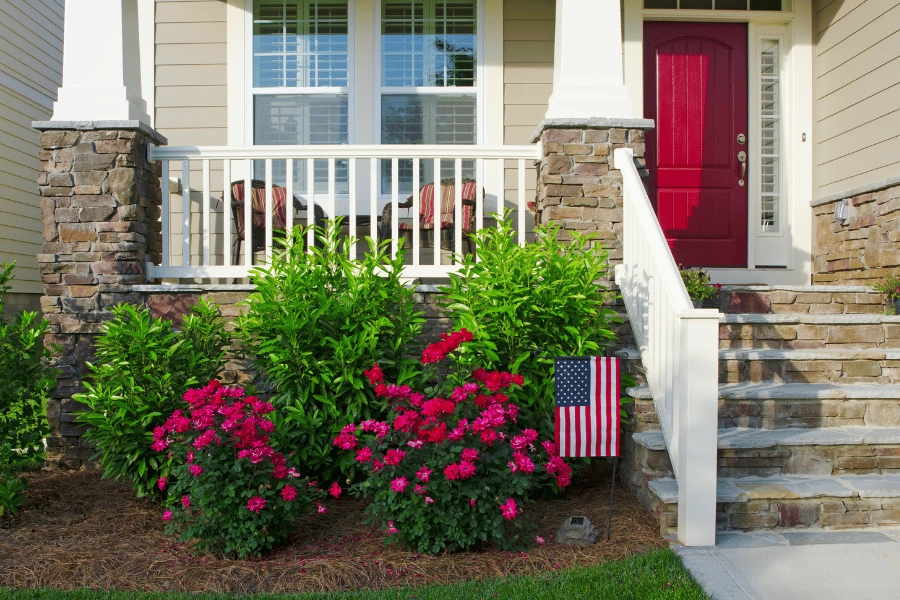
Are you searching for the best neighborhoods in Clayton, NC? If you are moving to Clayton, check out these top ten neighborhoods! Clayton's evolution from a small railroad town to a vibrant suburban destination has created a diverse and thriving community. As one of the Triangle's most desirable places to live, Clayton is a place many homebuyers are choosing for its affordable real estate and sma
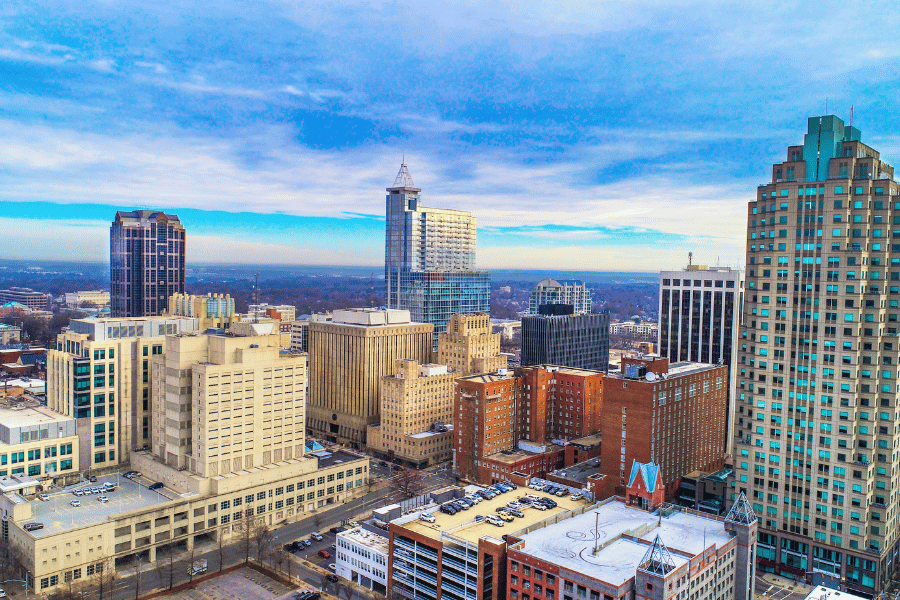
Is Raleigh, NC, a safe place to live? Here is what you need to know about Raleigh crime statistics, the safe neighborhoods in Raleigh, and how to stay safe in Raleigh. Raleigh is not only the capital of North Carolina but also a beautiful city known for its top-rated universities, historic attractions and museums, southern charm, numerous job opportunities, pleasant climate, and affordable housin