New - 18 Hours Ago





Moving to Chapel Hill, NC, puts you in one of the most recognizable college towns in the South, but the town is more than UNC basketball, Franklin Street, and Carolina blue.
Chapel Hill has a real personality. It is leafy, walkable in some areas, locally minded, and closely tied to the University of North Carolina. It also comes with higher housing costs, busy game-day weekends, limited new construction close to downtown, and a pace that feels different from Raleigh, Durham, or Cary.
Picture Franklin Street on a March morning. Dogwoods are blooming, students are walking to class, someone is carrying biscuits from Sunrise, and you are a few blocks from a university that first opened for students in 1795, making UNC the first public university in the U.S. to begin instruction, according to UNC Chapel Hill.
That is the charm of Chapel Hill. It feels historic without feeling stuck, and small without feeling sleepy.
Our team helps people relocate to Chapel Hill and the surrounding Triangle communities every week. This guide covers daily life, neighborhoods, buyer due diligence, and the trade-offs worth knowing before you move.
If questions come up while reading, call our team of Chapel Hill Realtors at 919-249-8536.
The nickname "Southern Part of Heaven" has followed Chapel Hill for generations. Spend a weekend here, and you'll understand why people keep using it.
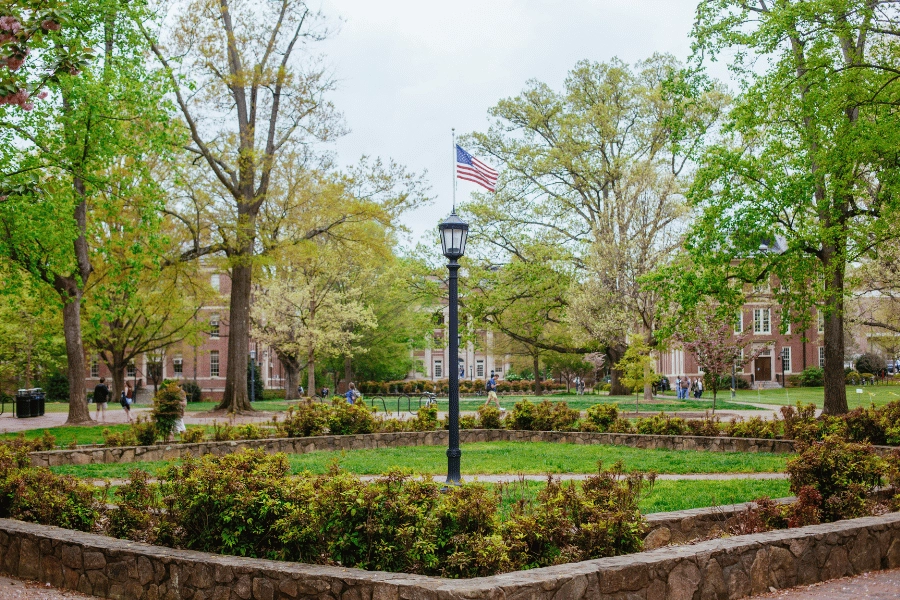
 The older parts of town sit under a thick canopy of oak, maple, pine, dogwood, and redbud trees. In spring, the streets around campus and downtown can feel more like a garden than a college town. That tree cover is one of the small daily details people miss when they leave.
Chapel Hill also moves at a different pace. Raleigh feels bigger and more businesslike. Durham feels a little more eclectic and urban. Chapel Hill feels like a town that grew up around a university and has kept its character.
You see it in the local restaurants, the preserved homes near campus, the old stone walls, the independent shops, and the way people talk about favorite streets as if they were sharing a secret.
That does not mean Chapel Hill is frozen in time. University Place has been reworked into a more modern mixed-use center, downtown keeps evolving, and new projects are moving forward south of town. The difference is that growth here tends to be closely watched because residents care deeply about the place's look and feel.
That local pride is part of the appeal. It is also why development can move more slowly here than in faster-growing suburbs like Apex or Holly Springs.
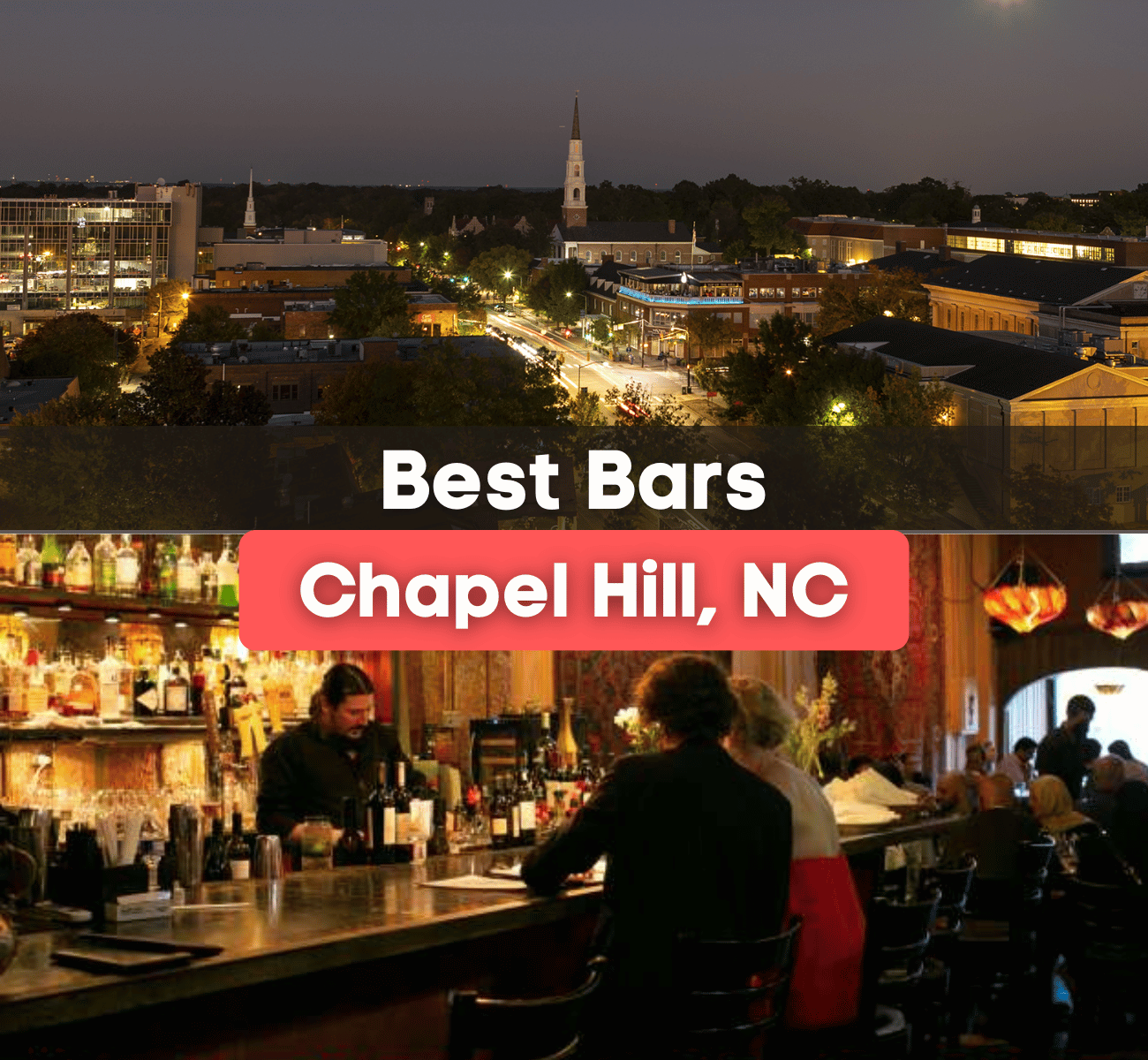
Franklin Street is Chapel Hill's front porch. It runs along the north edge of the UNC Chapel Hill campus and blends the university, downtown, restaurants, bars, bookstores, and coffee shops into one walkable strip.
 East Franklin leans more student-heavy, with quick food, Carolina gear, and late-night energy. West Franklin feels a little more local, with smaller shops, restaurants, and places that draw people who are not trying to make an 8 a.m. class.
A few Franklin Street names are part of the Chapel Hill experience:
Franklin Street also has a tradition you do not find in most towns. When UNC basketball wins big, the celebration often spills into the street within minutes. It is loud, crowded, and very Chapel Hill.
For buyers, the practical takeaway is simple. If you want to walk to restaurants, campus, coffee, and game-day energy, focus close to downtown, Northside, Gimghoul, and Franklin Street. If you want more quiet and more space, you will probably move farther out.
The food scene is one of the biggest surprises for people moving to Chapel Hill. You expect a few college-town staples. You get that, but you also get award-winning restaurants, long-running local institutions, farmers markets, and a grocery selection that feels unusually strong for a town this size.
 A few local favorites come up often:
The grocery situation is also a strength. Chapel Hill has national stores, budget options, and Weaver Street Market, a local cooperative with deep roots in the area.
The Chapel Hill Farmers Market adds another layer for people who want local produce, flowers, baked goods, and regular Saturday morning routines.
Chapel Hill is not trying to be Raleigh or Durham. It has its own food personality, and that is part of what makes living here feel different.
You cannot separate Chapel Hill from UNC, and you should not try. The university influences the economy, culture, traffic, restaurants, rentals, healthcare, sports, and the rhythm of the year.
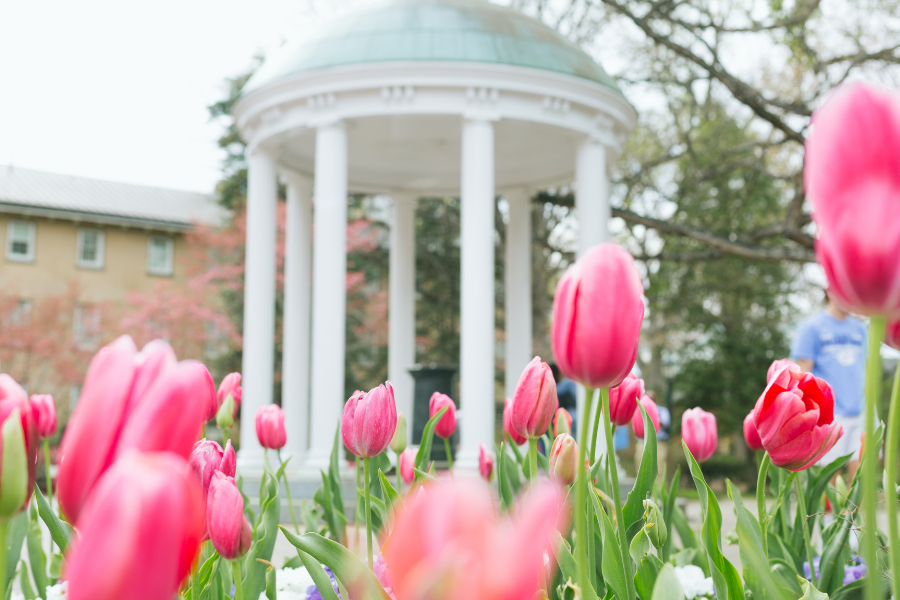
That brings a lot of benefits. UNC gives Chapel Hill a constant stream of lectures, performances, sporting events, medical research, and cultural energy. The campus itself is one of the prettiest places in town, especially around Polk Place, the Old Well, and the older stone buildings.
It also creates trade-offs. Move-in weekends are busy. Basketball games can change traffic patterns. Restaurants fill up quickly around big campus events. Some close-in housing competes with student rental demand.
For many residents, the benefits outweigh the inconveniences. The university gives Chapel Hill a level of energy and national visibility that most towns of its size do not have.
It also explains why Chapel Hill attracts people who like being around ideas. That intellectual personality is real, and it shows up in daily life.
Chapel Hill is a good town for people who like having simple things to do close by. You do not need a packed schedule here. A walk on campus, a loop through a greenway, a Saturday market, or a free museum visit can fill an afternoon.
 A few places worth knowing:
Inside town, the Bolin Creek and Battle Branch trails are popular for walking, running, and getting outside without committing to a full weekend plan.
Chapel Hill also hosts events like Festifall, which brings artists, music, food vendors, and local organizations to downtown.
One of the best parts of living in Chapel Hill is that you are not boxed into one type of weekend trip. The beach is east. The mountains are west. You can pick based on the weather, the season, or how much time you have.
Wrightsville Beach is one of the easier coastal drives. Topsail Island and Emerald Isle take a little longer, and the Outer Banks are farther but popular for longer summer trips.
Heading west, Boone and Blowing Rock are realistic mountain getaways, while Asheville and the Blue Ridge Parkway work well for a longer weekend.
You also have good outdoor options closer to home. Jordan Lake, Eno River, Duke Forest, and the Chapel Hill greenway system give residents plenty of ways to get outside without turning every weekend into a road trip.
That balance is one reason Chapel Hill appears on broader lists of the best places to live in North Carolina. The town gives you small-city daily life with access to much bigger regional amenities.
Choosing where to live in Chapel Hill usually comes down to four questions: how close you want to be to Franklin Street, how much yard you want, how much new construction you prefer, and how often you need to commute toward Durham, RTP, or Raleigh.
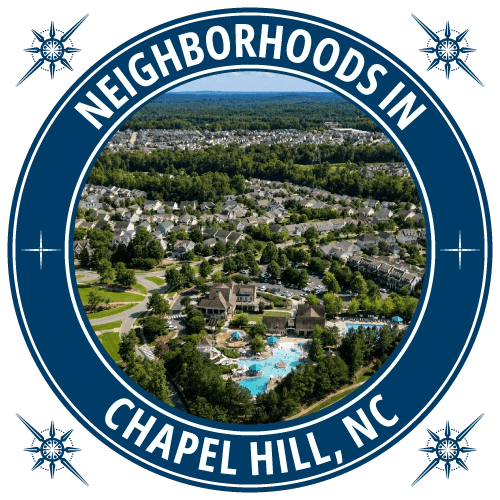 The closer you are to downtown and campus, the older and more walkable the housing tends to be. The farther south or west you go, the more likely you are to find newer homes, larger lots, planned communities, and more driving.
Downtown Chapel Hill offers the most walkable lifestyle. Homes near campus and Franklin Street tend to be older, character-rich, and competitive when they come on the market. Buyers should expect smaller lots and more renovation history than they would see in newer suburbs.
Southern Village, south of downtown, was designed around walkability. The neighborhood includes homes, shops, restaurants, a village green, and a movie theater area. It works well for buyers who like a neighborhood center without being directly downtown.
Meadowmont is on the east side of Chapel Hill near Highway 54, which makes access to I-40, Durham, and RTP easier than some deeper-in-town locations. It has a planned-community feel with sidewalks, parks, shops, and a mix of housing types.
Briar Chapel sits south of Chapel Hill in Chatham County. It offers newer homes, trails, amenities, and more planned-community structure. The trade-off is that it feels more suburban and requires a drive into Chapel Hill.
Governor's Club is a gated golf course community south of town. It offers privacy, larger homes, and a country club setting. Buyers should review HOA rules, club costs, and commute times before deciding it fits.
Carrboro borders Chapel Hill and often feels like part of the same daily life. It has its own restaurants, music venues, farmers market, and arts personality. Some buyers compare Chapel Hill and Carrboro together because the towns are so closely connected.
One important note: a Chapel Hill mailing address does not always mean the same school assignment, county, tax district, or commute pattern.


Many buyers ask about schools early in the Chapel Hill search. The town is served largely by Chapel Hill-Carrboro City Schools, but school assignment should always be verified by address with the district before you choose a home.
That last part matters. Boundaries can change, capacity can shift, and different neighborhoods can have different assignments even when they look close on a map.
Chapel Hill-Carrboro City Schools includes elementary, middle, and high schools serving Chapel Hill and Carrboro. Buyers often compare school assignments alongside commute, neighborhood feel, housing age, and price because all of those factors affect day-to-day life.
There are also private, charter, Montessori, and independent school options in and around the area, including Carolina Friends School.
Higher education is another part of the local advantage. UNC is in town, Duke University is nearby in Durham, and NC State University is in Raleigh. Those three universities help drive the larger Triangle economy.
Healthcare is one of the practical reasons people choose Chapel Hill. UNC Medical Center is in town, and Duke University Hospital is a short drive away in Durham.
That means residents have access to major academic medical systems, specialists, research hospitals, and second-opinion options without leaving the Triangle.
This can be useful for buyers who want strong medical access nearby, but there is a trade-off. Hospital-owned clinics may bill differently than independent offices, and some appointments can involve wait times.
The quality of access is a real strength. The complexity of the healthcare system remains a challenge to manage.
UNC and UNC Health are major local anchors, but Chapel Hill residents are not limited to jobs inside town. The broader Research Triangle economy is one of the main reasons people relocate here.
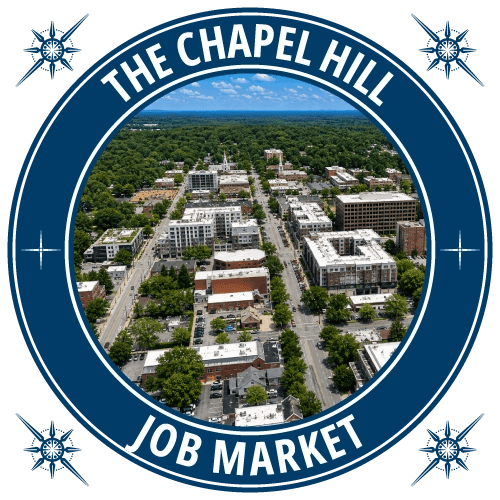 Research Triangle Park, located between Raleigh, Durham, and Chapel Hill, is home to companies in technology, life sciences, research, finance, and professional services. RTP access is one reason the east and southeast sides of Chapel Hill can be attractive to commuters.
Other major employment centers include Durham, downtown Raleigh, Cary, Morrisville, and the airport corridor. Remote work also fits well with Chapel Hill, as many residents value the town's daily lifestyle while working for companies elsewhere.
If you are moving here for work, map the commute from the exact neighborhood, not just from "Chapel Hill."
Chapel Hill is more walkable than many North Carolina towns, but it is not walkable everywhere. Downtown, campus-adjacent areas, Southern Village, Meadowmont, and parts of Carrboro offer better walking options. Many other neighborhoods still require a car.
Typical drive times from Chapel Hill can look roughly like this outside the worst traffic:
Chapel Hill Transit is a standout because the bus system is fare-free. That gives residents another option for campus, downtown, and certain local trips.
Still, most homeowners will want at least one vehicle. The more you move away from campus and downtown, the more car-dependent life becomes.
Chapel Hill gets four seasons. Spring comes early, fall is pleasant, winter is usually mild, and summer brings heat and humidity.
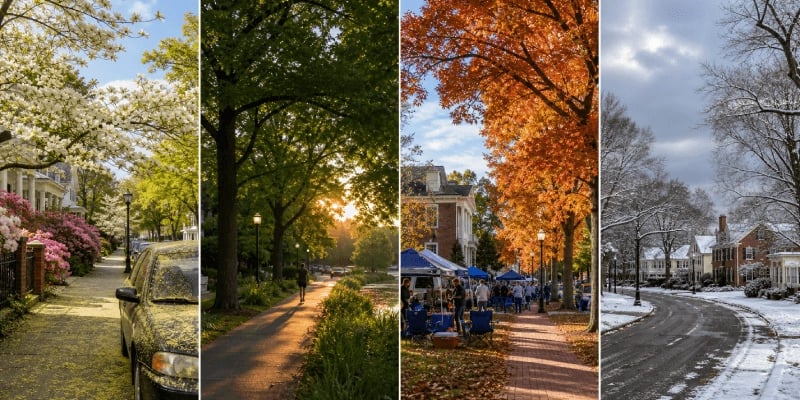
Spring is beautiful, especially when the dogwoods, redbuds, azaleas, and campus trees start blooming. It is also pollen season. Cars, porches, and patio furniture can turn yellow for a stretch, and newcomers with allergies usually notice.
Summer is hot and humid. Outdoor activity often shifts earlier in the morning or later in the evening. Air conditioning is not optional, and the shaded streets become a real quality-of-life feature.
Fall may be Chapel Hill's best season. The weather cools, football weekends bring energy, and the tree canopy changes color through October and November.
Winter is generally mild, with occasional cold snaps and occasional small snow or ice events. When winter weather does hit, the town slows down quickly because it is not built like a northern city.
Chapel Hill is not adding rooftops at the same pace as some outer Triangle suburbs. Land is limited, development is closely watched, and many close-in areas are already built out.
That is why larger projects stand out. South Creek, a major mixed-use project in southern Chapel Hill, has been reported as a roughly $500 million development with homes and commercial space planned over time. South of Chapel Hill, Chatham Park continues to grow in Pittsboro, and Disney's Storyliving community there is called Asteria.
These projects matter because growth south of Chapel Hill can affect traffic, shopping, housing options, and commute patterns.
The trade-off is location. Newer homes farther south may offer more space and amenities, but they will not feel the same as living close to Franklin Street or campus.
Chapel Hill is the kind of place where small address details can change the whole picture. Before you fall in love with a home, verify the basics.
This is where a local agent matters. Two houses can look similar online and live completely differently once you factor in roads, schools, taxes, and daily convenience.
Chapel Hill has more strengths than weaknesses, but it is not the right fit for every buyer. Here is the honest version.
Chapel Hill, NC, is not the right fit for everyone. Housing costs can run higher than nearby towns, summer humidity is real, and the best location depends heavily on your commute and lifestyle.
Still, the people who love Chapel Hill tend to really love it. The trees, food, campus, neighborhoods, healthcare access, and local character make it one of the most distinctive places to live in the Triangle.
If you are thinking about moving to Chapel Hill, contact Raleigh Realty or call 919-249-8536. Our team can help you compare neighborhoods, understand the trade-offs, and find the right home for the way you actually want to live.