New - 15 Mins Ago


$539,990
Active
4
Beds
3
Baths
2366
Sqft
0.143
Acres
4225 Avaruth Ln #111, Fuquay Varina, NC 27526
MLS#: 10198939



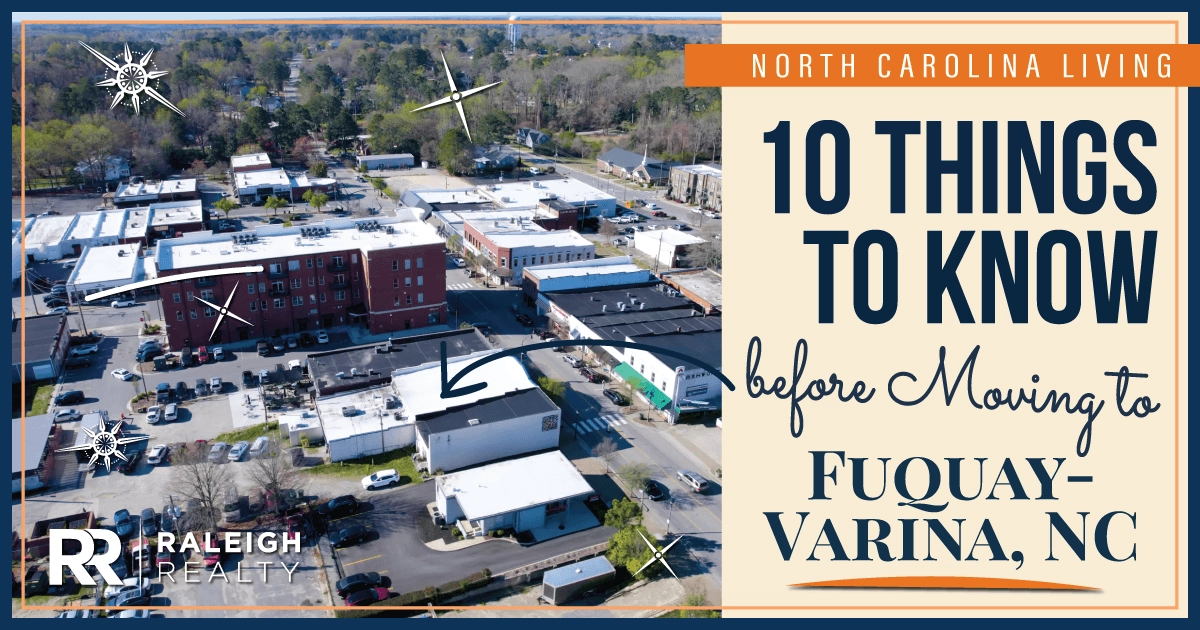
Fuquay-Varina has become one of the most talked-about suburbs south of Raleigh. It still has a small-town feel in parts of town, but the growth is obvious as soon as you drive the main roads, pass the new construction, or try to get through town during rush hour.
Fuquay-Varina can be a great fit if you want more home for your money than Apex, Cary, or Holly Springs, a growing restaurant and brewery scene, and access to Wake County amenities without living in the middle of Raleigh. The trade-off is traffic, construction, and a town that is changing faster than the surrounding road network.
We made a video with all the details about Fuquay-Varina, if you would rather watch than read.
Moving to Fuquay-Varina makes the most sense if you want a fast-growing town south of Raleigh with newer homes, two downtown areas, local restaurants, parks, and more value than many nearby Wake County suburbs. The biggest drawbacks are traffic, ongoing construction, and the need to check whether a specific home falls on the Wake County or Harnett County side of the market.
Here are the things I would pay attention to before moving to Fuquay-Varina.
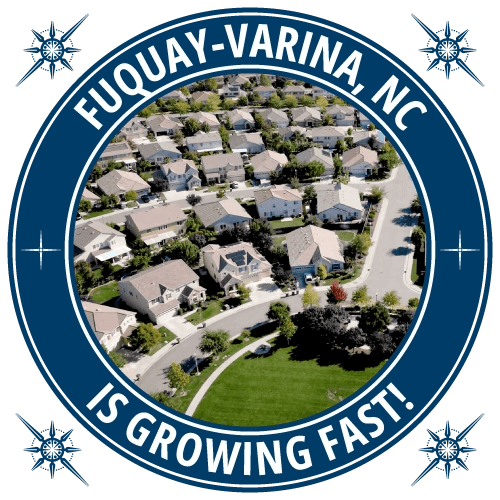 Fuquay-Varina is not the sleepy town it used to be. The town’s population grew from 17,937 in 2010 to 34,152 in 2020, and the town lists a 2024 population estimate of 46,617 on its demographic page.
That growth explains a lot of what people notice right away. You will see active subdivisions, newer commercial areas, road work, construction traffic, and more businesses moving into town. Restaurants, breweries, grocery stores, and everyday services are keeping pace with growth, but roads and intersections have not always kept up.
This is the real story of Fuquay-Varina right now. People like the location and the relative value, but the popularity comes with growing pains. If you are moving from a larger metro, the traffic may not shock you. If you are expecting a quiet small town with easy roads, Fuquay-Varina may feel busier than expected.
 Ask people what they dislike about Fuquay-Varina, and traffic usually comes up first. Many people like the town, but they are frustrated by how long it can take to get across town or reach Raleigh, Holly Springs, Garner, or RTP during busy times.
The main reason is simple. Fuquay-Varina does not have a freeway running directly through the middle of town. Much of the daily driving relies on roads such as US-401 and NC-55, which can back up during commuter hours. NCDOT’s Complete 540 project is intended to improve regional connections and ease traffic on local roads in southern Wake County, but it does not erase the day-to-day reality today.
Before getting serious about a specific area, I would check three things: the commute route at the time you will actually drive it, how the home connects to US-401 or NC-55, and whether your daily errands push you through the busiest parts of town. A home that looks close on a map may still put you on a slower road every time you need groceries, school, daycare, or dinner.
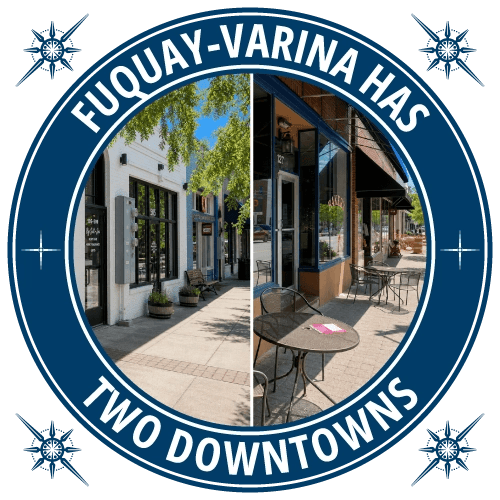 One of the best things about Fuquay-Varina is that it does not revolve around one single strip center. The town grew from two separate communities, Fuquay Springs and Varina, which joined to form a single municipality in 1963, according to the town’s history page.
That history still shows in the town's layout. Downtown Fuquay has local shops, coffee, restaurants, and the older Fuquay Springs identity. Downtown Varina, around Broad Street, has its own restaurant, brewery, and historic-street feel. The two downtowns are close enough that they feel connected, yet each has a slightly different personality.
The original mineral spring is preserved at Fuquay Mineral Spring Park, with walking paths, open space, a restored springhouse, picnic tables, and a footbridge. It is not a huge park, but it gives the town a real historic anchor and helps explain why Fuquay-Varina feels different from a newer suburb built around only subdivisions and shopping centers.
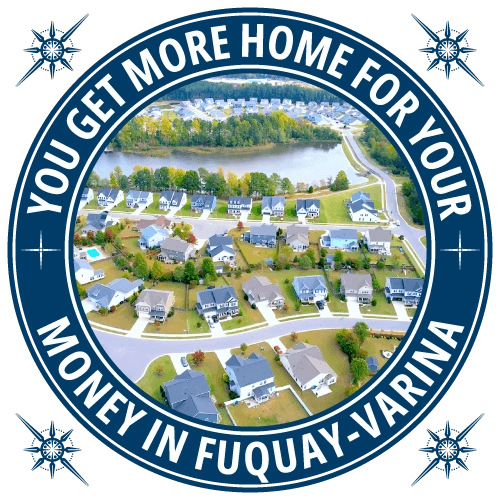 Fuquay-Varina often attracts buyers who want to stay in the southwest side of the Triangle without paying Apex, Cary, or Holly Springs prices. That value gap is one reason the town has grown so quickly.
The mistake is assuming Fuquay-Varina is still inexpensive because it sounds like a small rural town. It is not. New construction, larger homes, and continued demand have pushed prices higher over the last several years. Fuquay-Varina still offers value compared with many nearby suburbs, but it is no longer a hidden secret.
When comparing Fuquay-Varina homes, look beyond the list price. A newer home on the southern edge of town may feel very different from a resale home closer to downtown Fuquay or downtown Varina. Lot size, commute route, county line, school district, future development, and nearby road projects can all change the decision.


This is one of the easiest details to miss if you are moving from outside the area. Fuquay-Varina is strongly associated with Wake County, but the broader Fuquay-Varina market also extends into Harnett County.
That matters because county lines can affect schools, property taxes, commute patterns, and resale comparisons. Wake County addresses generally fall under Wake County Public Schools, while Harnett County addresses fall under Harnett County Schools.
If schools are part of your search, check the exact address with the district. Do not rely only on the city name, subdivision marketing, or a listing description. Two homes can both feel like Fuquay-Varina online, yet create different school, tax, and commute situations in real life.
 Fuquay-Varina is one of the better places to look if you want a newer home south of Raleigh. The town’s growth has led to many new neighborhoods, and many buyers compare Fuquay-Varina with Holly Springs, Apex, Angier, and parts of Garner.
New construction can be a big advantage if you want open kitchens, larger primary suites, flex rooms, home-office space, newer systems, and community amenities. Some neighborhoods have pools, playgrounds, trails, or clubhouse-style features, depending on the community.
The trade-off is that construction can be part of daily life. Roads, nearby lots, noise, dust, and changing traffic patterns are worth checking before you fall in love with a model home. I would also look at what is planned around the neighborhood, not just what is already built.
Fuquay-Varina can look like a typical fast-growing suburb along some main roads, but the local food scene is stronger than that first impression. The downtown areas are where the town feels more interesting.
A few local names come up often when people talk about Fuquay-Varina. Stick Boy Bread Co. is a popular stop for coffee, pastries, sandwiches, and cinnamon rolls. Aviator Brewing is one of the names most associated with the town’s brewery scene. Vicious Fishes, The Mason Jar Tavern, Zeera Indian Restaurant, Garibaldi Trattoria, and Cultivate Coffee all help give the town more local flavor than a first drive down the main commercial roads may suggest.
The restaurant scene is still not Cary, Raleigh, or Durham. You will still drive to other parts of the Triangle for certain cuisines, big nights out, or more variety. For a town that has grown this quickly, Fuquay-Varina has more local personality than many people expect.
Fuquay-Varina has more outdoor space than many people realize. The town operates 11 trails and greenways, according to its trails page.
 Hilltop Needmore Town Park is one of the bigger local anchors, with 143 acres of open green space, ponds, and 5 miles of paved trails. The town’s newest community center at Hilltop Needmore includes a gymnasium, indoor track, exercise room, classrooms, basketball, volleyball, pickleball, and racquetball courts.
Carroll Howard Johnson Environmental Education Park is another useful local spot, with 28 acres, 2 miles of trails, overlooks, natural bridges, streams, and nature education. South Park adds athletic fields, playgrounds, a walking track, outdoor basketball courts, picnic space, and a connection to the Jeff Wells Trail.
If outdoor access matters, look at the specific side of town and the neighborhoods you are comparing. Some areas make parks and greenways part of daily life, while others still require a short drive.
Fuquay-Varina has more shopping than it used to, but it is still not the same as living in Cary, Raleigh, or a more built-out retail corridor. Depending on where you live in town, you may still drive to Holly Springs, Garner, Apex, or Raleigh for certain errands.
You can handle many daily basics in and around town, including groceries, pharmacies, Walmart, Home Depot, restaurants, coffee, and local services. For some bigger retail trips, specialty stores, or more restaurant variety, nearby towns may still be part of your routine.
This is a good example of Fuquay-Varina’s overall trade-off. You get a growing town with local character, but you may not get every big-city convenience within five minutes.
Even with the growth, parts of Fuquay-Varina still feel less dense than Cary, Apex, or Raleigh. You will see farmland, wooded land, older homes, new subdivisions, and commercial corridors all within the same general market.
That mix is part of the appeal, but it can surprise buyers. If you want a city feel, Fuquay-Varina may feel too spread out. If you want a local downtown, the two-downtown setup gives the town more character than many suburbs. If you want convenience, choose your location carefully, because errands can vary a lot depending on which side of town you're on.
The best way to understand the town is to drive it when you would actually use it. Visit during weekday rush hour, on a Saturday morning, and around dinner time. Fuquay-Varina can feel different in each window.
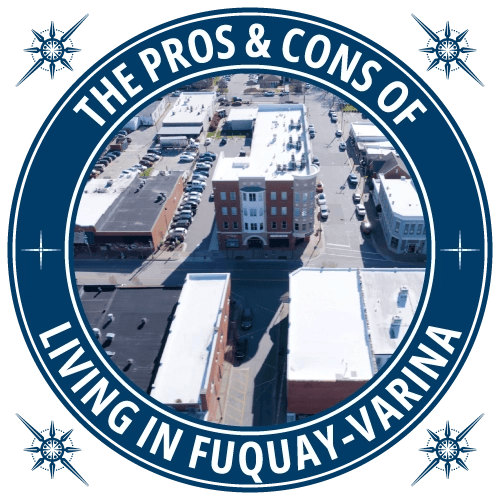 Fuquay-Varina has a lot to offer, but it is not the right fit for every buyer. Here is the honest version of what stands out.
Fuquay-Varina is worth a serious look if you want newer homes, two downtown areas, local restaurants, parks, and a little more breathing room south of Raleigh. The best fit depends on the exact address, your commute route, the county line, the school district, and how close you want to be to daily shopping and restaurants.
Raleigh Realty can help you compare Fuquay-Varina with Holly Springs, Apex, Garner, Angier, and other Triangle suburbs before you narrow your search too far. Call or text the brokerage at 919-249-8536 or reach out ot one of our Fuquay-Varina realtors.
![17 Best Neighborhoods in Raleigh, NC [2026 Guide]](https://images.agentloft.com/rr-images/uploads/rr-migrated/blogs/August2024/E0Cjyqy5pGsC61lv5bGG.jpg)
Are you looking for the best neighborhoods in Raleigh, NC? Here are 17 great neighborhoods to call home in Raleigh! Raleigh, North Carolina's vibrant capital city, has earned its reputation as one of the fastest-growing metropolitan areas in the United States. Known as the "City of Oaks" for its majestic tree-lined streets, Raleigh offers newcomers an exceptional quality of life that balances Sou
I own and operate Raleigh Realty, and I spend a lot of time helping people understand what life in Raleigh is actually like before they move here. This is my honest guide to living in Raleigh, NC, with the good parts, the annoying parts, and the details most relocation articles skip.Raleigh is the capital of North Carolina and one of the main anchors of the Research Triangle. The Raleigh-Cary met
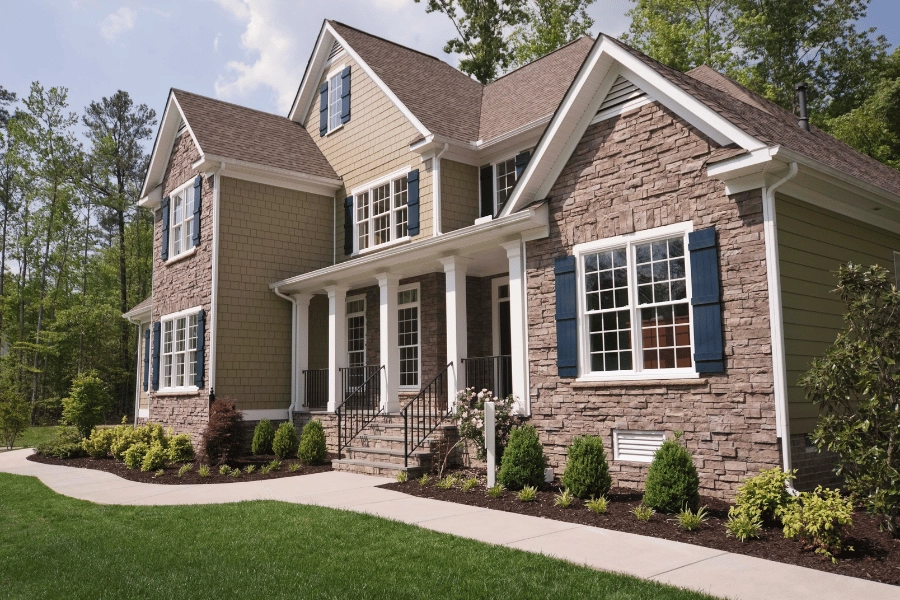
What are the best neighborhoods in Fuquay-Varina, NC? Here are the best places to live in Fuquay-Varina! Living in Fuquay-Varina has its benefits, and one of the major pluses is the great neighborhoods and community. As one of the fastest-growing cities in North Carolina, Fuquay-Varina has doubled its population over the past 10 years, reaching over 43,817 residents.Located just south, 25 minutes

Is Raleigh, NC, a safe place to live? Here is what you need to know about Raleigh crime statistics, the safe neighborhoods in Raleigh, and how to stay safe in Raleigh. Raleigh is not only the capital of North Carolina but also a beautiful city known for its top-rated universities, historic attractions and museums, southern charm, numerous job opportunities, pleasant climate, and affordable housin