New - 3 Hours Ago


$398,000
Active
5
Beds
3
Baths
2511
Sqft
--
Acres
2208 Clydesmill Rd, Fayetteville, NC 28314
MLS#: LP770050


Find the newest real estate listings and homes for sale in Fayetteville with Raleigh Realty. On this page, you can view every property for sale in Fayetteville, photos, listing details, school information, and more. Our goal is to make it as easy as possible for you to find a home you'll love in Fayetteville. Our local Fayetteville Realtors are ready to assist you, whether you're selling your house in Fayetteville or looking for a great property that suits your lifestyle. We are standing by to help, and please don't hesitate to call us at 919-249-8536!
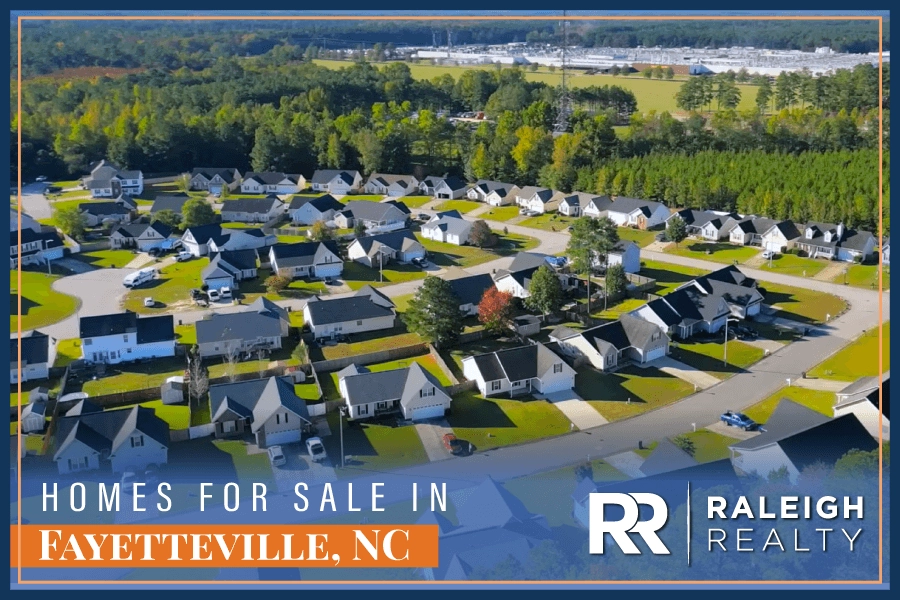
Fayetteville’s median list price sits between starter homes on the west side and luxury addresses near Highland Country Club and Forest Creek. Roughly 1,800 active listings run from the low $100s in older west-side neighborhoods to more than $1M in the higher-end pockets. Before you worry about property type, it helps to decide which side of town fits your commute and day-to-day routine.
Fayetteville is in Cumberland County, about an hour south of Raleigh. Three major employers shape the market: Fort Bragg, Cape Fear Valley Health, and two universities. Together they create a wide spread of price points and property types, plus a steady PCS cycle that shows up in the listing feed every month.
Most buyers start by asking about neighborhoods and end up choosing a side of town. Six main areas handle most of the resale activity, each with its own price range, build era, and feel.
A 1980s ranch on the west side and a 2018 custom home in north Ramsey may both sit near the citywide median price, but they offer very different lifestyles. It usually makes sense to pick your side of town first and then refine by property type.
Three anchors drive most of the demand in Fayetteville. Knowing where they sit helps the listings make more sense.
Fort Bragg is one of the largest Army installations in the country by active-duty population, and PCS orders push a seasonal listing wave that peaks between April and August. That wave shows up most clearly in north Ramsey and west-side neighborhoods, where military resale has long been strong. Many Fayetteville sales use VA loans, VA loan assumptions, or VA-related grants.
Cape Fear Valley Medical Center anchors a hospital system that is one of the largest non-military employers in the region. The main campus sits on the north edge of Haymount just off Owen Drive. Physician and nursing demand supports Haymount, Vanstory, and older 28303 homes, along with newer inventory in north Ramsey.
Fayetteville State University sits on the east side near downtown, and Methodist University is north off Ramsey Street. Together they add a steady base of faculty and staff buyers in the mid-price ranges, plus a smaller rental-property segment that occasionally shows up in the coming-soon feed.
A simple way to approach the search is to pick your area first, then narrow by property type and features, and finally pull tax jurisdiction and school assignment for your short list before scheduling showings. Our team at Raleigh Realty runs these pieces up front for every Fayetteville search, especially for buyers relocating from outside North Carolina who are still learning which side of town fits their needs. Call our office at 919-249-8536 to talk through your options.